

Beyond the Rubber Sheet: Why It’s Time to Reconsider the EPDM Standard

Richard Provance • January 18, 2026

Share this article

PolyArmor Roofing Logo BlackFor decades, Ethylene Propylene Diene Terpolymer—better known as EPDM—has been the “old faithful” of the flat roofing industry. If you walk across a commercial rooftop in any major city, there is a high probability you are standing on a black rubber membrane. It became the industry standard because it was relatively inexpensive, easy to manufacture, and offered a significant leap forward from the old hot-tar-and-gravel roofs of the mid-20th century.
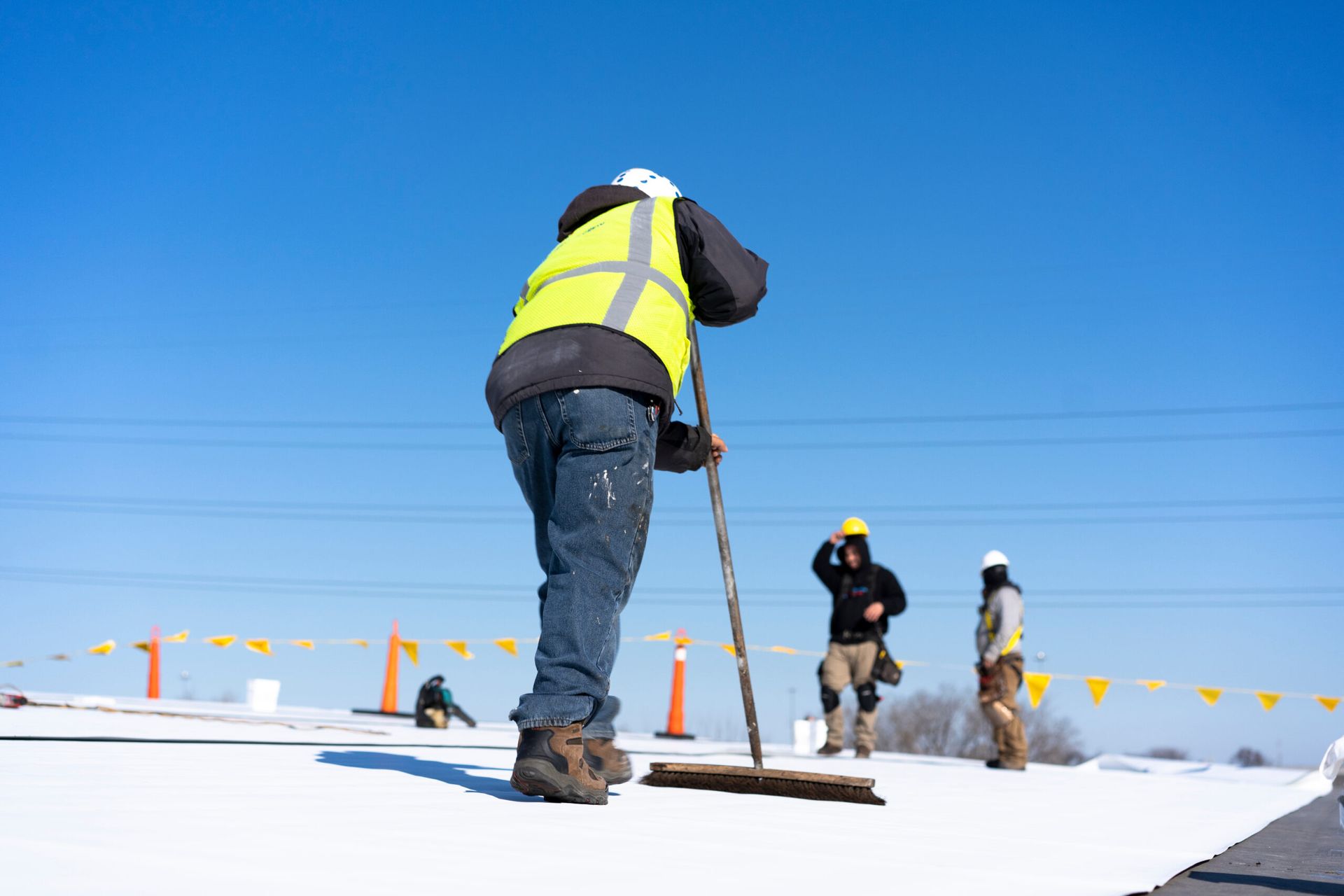
However, the roofing industry is currently undergoing a quiet revolution. As building owners look for ways to increase energy efficiency and decrease the long-term cycle of repairs, the limitations of traditional rubber sheets are becoming more apparent. While EPDM has its place in history, modern fluid-applied systems like PolyArmor are presenting a compelling case for why the “sheet” era of roofing might be coming to a close.

The Legacy and Mechanics of EPDM Roofing

To understand why an alternative is necessary, one must first respect the engineering behind the original. According to the EPDM Roofing Association, this synthetic rubber membrane has been utilized in the United States since the 1960s. It is praised for its ability to withstand extreme temperatures and its inherent resistance to ozone and UV radiation. EPDM is typically sold in large rolls or sheets, which are then laid out across a roof deck and secured using mechanical fasteners, ballasts, or heavy-duty adhesives.

The EPDM industry highlights the material’s longevity, noting that many systems have lasted 20 to 30 years when properly maintained. However, “properly maintained” is the operative phrase. The very nature of EPDM—being a sheet-based product—creates inherent structural vulnerabilities that building owners must constantly monitor.

The Achilles’ Heel of Traditional Membranes: Seams

The biggest challenge with any sheet-based roofing system is not the material itself, but the gaps between the materials. No matter how large an EPDM roll is, it will eventually end, and another roll must be overlapped and sealed to it. On a standard commercial roof, there can be miles of seams.

These seams are held together by specialized tapes or liquid adhesives. Over time, the constant expansion and contraction of the building—driven by daily temperature fluctuations—puts immense stress on these joints. Eventually, the adhesive can dry out or pull apart, creating a “fish mouth” or a gap. Once a seam fails, water can travel under the membrane for dozens of feet, making the actual leak point nearly impossible to find from the inside. This is where PolyArmor offers a distinct advantage. By moving away from sheets and adopting a fluid-applied approach, you eliminate the concept of a “seam” entirely.

PolyArmor: The Monolithic Shield

PolyArmor represents the next generation of building protection. Unlike EPDM, which is manufactured in a factory and “installed” on-site, PolyArmor is essentially a custom-manufactured roof that is created directly on top of your building. It is applied as a liquid, meaning it flows into every crack, crevice, and corner, then cures into a single, monolithic, rubberized membrane.

This “shrink-wrap” effect provides several critical benefits that traditional rubber sheets simply cannot match:

  • Zero Seams: There are no taped joints to fail. The entire roof, from edge to edge, is a single piece of high-performance material.
  • Self-Flashing: Around HVAC units, vent pipes, and skylights, traditional EPDM requires complex “flashing” kits and detailed hand-work with adhesives. PolyArmor simply coats these penetrations, creating a permanent, waterproof bond that moves with the structure.
  • Full Adhesion: EPDM is often “loose-laid” or mechanically fastened, meaning air and water can move underneath the membrane if a puncture occurs. PolyArmor is 100% bonded to the substrate, preventing water migration.

Thermal Dynamics and the “Cool Roof” Advantage

One of the most significant drawbacks of traditional EPDM is its color. The vast majority of EPDM roofs are black. While this might seem like a minor aesthetic detail, it has a massive impact on the building’s physics. A black rubber roof can reach temperatures of 170°F or higher on a sunny summer day. This heat is transferred directly into the building, forcing air conditioning systems to work harder and increasing the “thermal shock” to the roof itself.

Thermal shock occurs when a roof goes from 170°F in the afternoon sun to 70°F during a sudden summer rainstorm. This rapid cooling causes the material to contract violently. Over years of these cycles, EPDM membranes can become brittle and adhesives can fail.

PolyArmor systems are typically bright white and highly reflective. Instead of absorbing the sun’s energy, they bounce it back into the atmosphere. This keeps the roof surface significantly cooler—often within 10 degrees of the ambient air temperature. By stabilizing the temperature of the roof, PolyArmor reduces energy costs and protects the building from the destructive forces of thermal expansion and contraction.

The Sustainability Argument: Restoration vs. Replacement

Sustainability in the roofing industry is often measured by what stays out of the landfill. When an EPDM roof reaches the end of its life, the traditional solution is a “tear-off.” This involves ripping up thousands of pounds of rubber and insulation and hauling it to a dump. It is an environmentally taxing process that adds significant cost to a project.

PolyArmor is designed for restoration. In many cases, an aging EPDM roof that has started to chalk or leak can serve as a perfectly viable substrate for a PolyArmor application. Instead of destroying the old roof, PolyArmor rejuvenates it. This “roof restoration” process saves building owners an average of 30% to 50% compared to a full replacement, all while keeping tons of debris out of local waste streams.

Long-Term Maintenance and Ease of Repair

No roof is invincible. Whether it’s a dropped tool from a maintenance worker or debris from a severe storm, punctures can happen. On an EPDM roof, finding a small hole in a black membrane is like finding a needle in a haystack. Furthermore, once EPDM ages, the oils in the rubber dissipate, making it difficult for new patches to bond to the old surface.

PolyArmor is exceptionally easy to maintain. Because it is a fluid-applied system, any mechanical damage can be repaired with a simple brush-applied patch of the same material. The new PolyArmor chemically bonds to the existing layer, creating a permanent fix. Perhaps most importantly, the system is “renewable.” After 20 years, rather than replacing the roof, a technician can simply apply a fresh topcoat to the existing PolyArmor system, essentially resetting the clock on the roof’s lifespan for a fraction of the cost of a new installation.

The Evolution of the Flat Roof

While EPDM served the industry well for half a century, the demands of modern buildings have changed. We now prioritize energy efficiency, lower lifetime costs, and sustainable construction practices. The transition from EPDM sheets to a seamless PolyArmor system reflects a broader shift in construction: moving away from “assembling” parts and moving toward “integrated” systems.

By choosing a monolithic, reflective, and renewable alternative to traditional rubber, building owners are doing more than just stopping leaks. They are investing in a smarter, more resilient piece of infrastructure that protects their assets, their tenants, and their bottom line. The era of the black rubber sheet is ending; the era of the seamless shield has arrived.

Recent Posts

Commercial flat roof in spring
By Richard Provance • April 16, 2026
Spring is the best window to coat a flat roof. Learn what winter does to commercial roofs and why mild temperatures help a coating cure and bond.
Crew applying PolyArmor coating on a flat roof
By Richard Provance • March 15, 2026
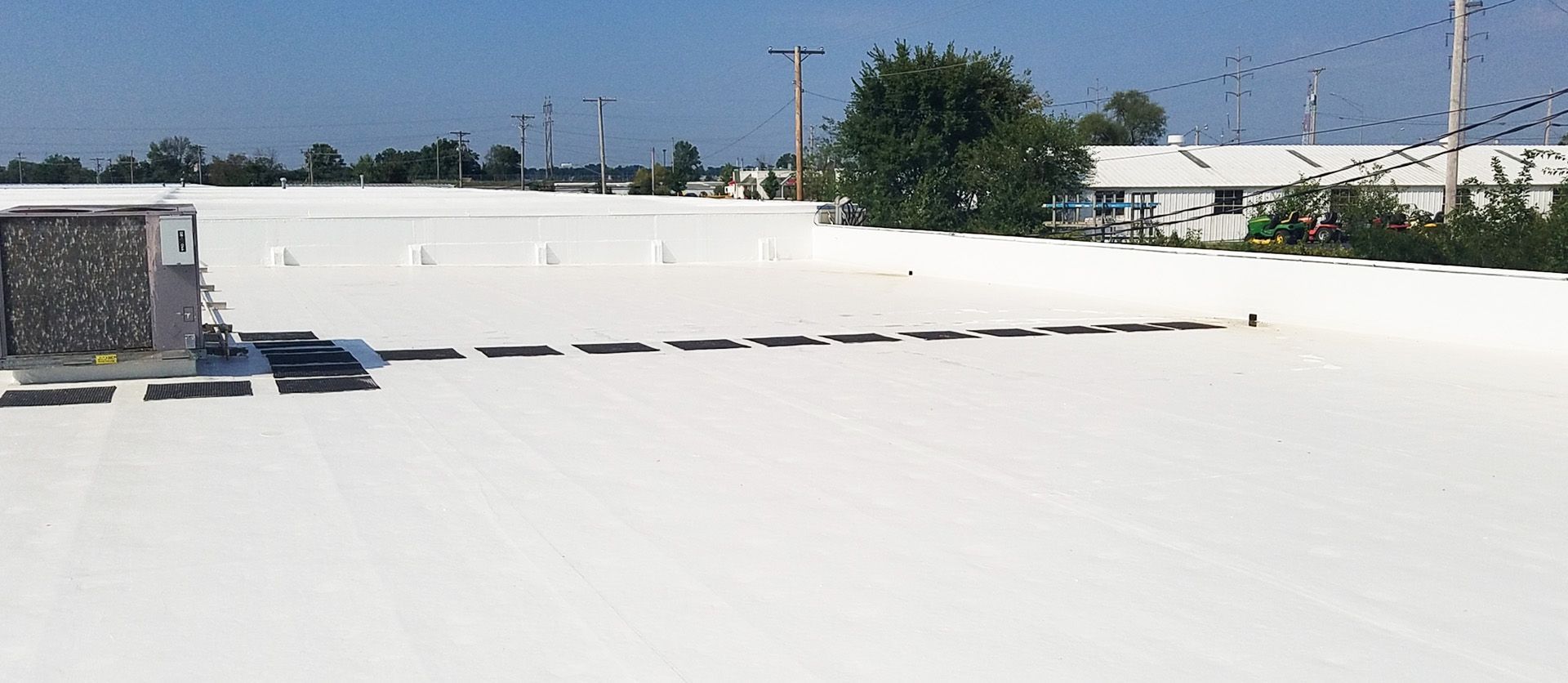
Facing a full tear-off bid? See how a PolyArmor coating restores an existing flat roof for less cost and disruption than a replacement.
PolyArmor structural roof repair
By Steve • February 22, 2026
Meet the waterproofers and coating chemists behind PolyArmor, and how hands-on roofing experience shaped the coatings we make in St. Louis.
Flat roof seam
By Richard Provance • February 5, 2026
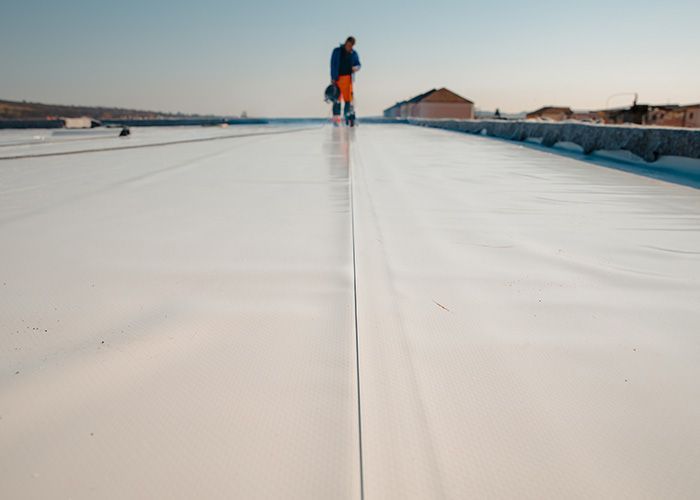
What drives flat roof repair pricing? A breakdown of materials, labor, roof condition and access so building owners know what they're paying for.
PolyArmor logo
By Richard Provance • July 11, 2025
Central Middle School in St. Louis protected its roof with a PolyArmor coating system. Here's an overview of the project.
Coated commercial flat roof
By Richard Provance • April 19, 2023
Flat roof coatings can add years to a commercial roof. The main benefits, from leak protection to energy savings and avoided replacement costs.
Flat roof maintenance on a commercial building
By Richard Provance • March 30, 2023
Regular flat roof maintenance protects property value. Practical upkeep steps that help a commercial or residential flat roof last longer.
Roller applying flat roof coating
By Richard Provance • March 30, 2023
Simple ways to extend the life of a flat roof, from routine inspections and drainage checks to protective coatings.
TPO flat roof
By Richard Provance • March 15, 2023
Why flat roof work should be done by an experienced professional, and what can go wrong when repairs are rushed or done yourself.
Built-up flat roof
By Richard Provance • March 15, 2023
Why flat roofs are popular on commercial buildings: lower cost, usable space, easy access and less upkeep when the roof is properly protected.
Show More